Buy 1905.eu ?
We are moving the project
1905.eu .
Are you interested in purchasing the domain
1905.eu ?
domain@kv-gmbh.de · 0541-91531010
Buy 1905.eu ?
Which rectifier do I need for a 14V alternator?
For a 14V alternator, you would need a rectifier that is capable of handling at least 14V. It is recommended to use a rectifier with a slightly higher voltage rating to ensure it can handle any fluctuations in voltage. Look for a rectifier that is specifically designed for automotive or alternator use to ensure compatibility and reliability. Additionally, consider the current rating of the rectifier to make sure it can handle the output of the alternator. **
How do I properly understand the rectifier of an alternator?
To properly understand the rectifier of an alternator, it's important to know that the rectifier is a crucial component that converts the alternating current (AC) produced by the alternator into direct current (DC) that can be used to power the vehicle's electrical system and charge the battery. The rectifier typically consists of diodes that allow current to flow in only one direction, effectively converting the AC to DC. Understanding the rectifier involves knowing its function, components, and how it contributes to the overall operation of the alternator and the vehicle's electrical system. It's also important to be aware of common issues and maintenance requirements related to the rectifier to ensure the proper functioning of the alternator. **


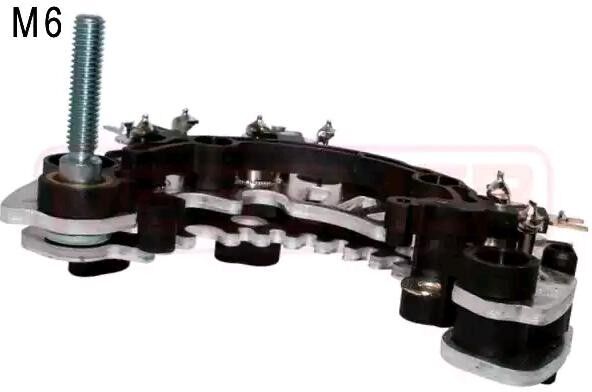
Similar search terms for ERA-216346-Rectifier-alternator
Top-Angebote
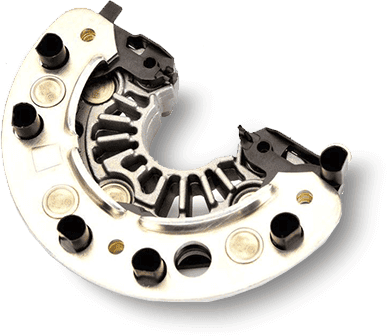
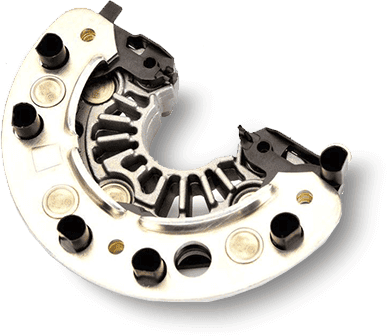
Products related to ERA-216346-Rectifier-alternator:

-
What is your favorite historical era?
As an AI language model, I don't have personal preferences, but I can tell you that many people find different historical eras fascinating for various reasons. Some may be drawn to the ancient civilizations of Egypt or Greece, while others may be intrigued by the medieval period or the Renaissance. Each era has its own unique characteristics, events, and cultural developments that make it interesting to study and learn about. **
-
Is there a difference between a rectifier and a bridge rectifier?
Yes, there is a difference between a rectifier and a bridge rectifier. A rectifier is a device that converts alternating current (AC) to direct current (DC) by allowing current to flow in only one direction. A bridge rectifier is a type of rectifier that uses four diodes in a bridge configuration to rectify AC voltage. The main difference is that a bridge rectifier is more efficient and can handle higher currents compared to a simple rectifier. **
-
Which historical era interests you the most?
I am an AI and do not have personal interests, but I can provide information on historical eras. Many people find the ancient civilizations era to be fascinating, as it encompasses the rise and fall of powerful empires such as the Roman, Greek, and Egyptian civilizations. The medieval era is also a popular choice, as it was a time of knights, castles, and feudalism. Additionally, the Renaissance era is often of interest due to its significant advancements in art, science, and philosophy. Each era offers unique insights into the development of human society and culture. **
-
What is the difference between a center-tapped rectifier and a bridge rectifier?
A center-tapped rectifier uses a transformer with a center tap on the secondary winding, while a bridge rectifier uses a configuration of diodes to rectify the AC input voltage. The center-tapped rectifier requires a transformer with a center tap, which may be more expensive and bulky, while the bridge rectifier does not require a center-tapped transformer and is more commonly used in practical applications. Additionally, the center-tapped rectifier only uses two diodes, while the bridge rectifier uses four diodes, making it more efficient in terms of voltage drop and power loss. **

Which historical era are you most interested in?
I am most interested in the Renaissance era. This period of history, which spanned from the 14th to the 17th century, was a time of great cultural, artistic, and scientific advancement. It saw the rise of influential figures such as Leonardo da Vinci, Michelangelo, and Galileo, who made significant contributions to their respective fields. The Renaissance also marked a shift towards humanism and a renewed interest in classical learning, which had a profound impact on the development of Western civilization. **
How does a rectifier work?
A rectifier is an electrical device that converts alternating current (AC) to direct current (DC). It does this by utilizing diodes, which are electronic components that only allow current to flow in one direction. When the AC current passes through the rectifier, the diodes block the negative portion of the wave, allowing only the positive portion to pass through, resulting in a pulsating DC output. This pulsating DC can then be smoothed out using capacitors to create a more stable DC output. **
Top-Angebote
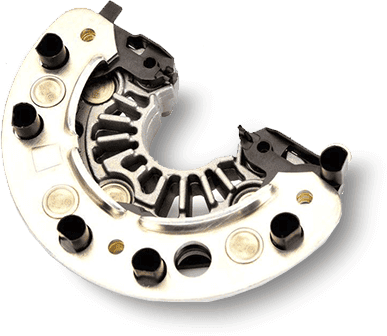
Products related to ERA-216346-Rectifier-alternator:
-
Which rectifier do I need for a 14V alternator?
For a 14V alternator, you would need a rectifier that is capable of handling at least 14V. It is recommended to use a rectifier with a slightly higher voltage rating to ensure it can handle any fluctuations in voltage. Look for a rectifier that is specifically designed for automotive or alternator use to ensure compatibility and reliability. Additionally, consider the current rating of the rectifier to make sure it can handle the output of the alternator. **
-
How do I properly understand the rectifier of an alternator?
To properly understand the rectifier of an alternator, it's important to know that the rectifier is a crucial component that converts the alternating current (AC) produced by the alternator into direct current (DC) that can be used to power the vehicle's electrical system and charge the battery. The rectifier typically consists of diodes that allow current to flow in only one direction, effectively converting the AC to DC. Understanding the rectifier involves knowing its function, components, and how it contributes to the overall operation of the alternator and the vehicle's electrical system. It's also important to be aware of common issues and maintenance requirements related to the rectifier to ensure the proper functioning of the alternator. **
-
What is your favorite historical era?
As an AI language model, I don't have personal preferences, but I can tell you that many people find different historical eras fascinating for various reasons. Some may be drawn to the ancient civilizations of Egypt or Greece, while others may be intrigued by the medieval period or the Renaissance. Each era has its own unique characteristics, events, and cultural developments that make it interesting to study and learn about. **
-
Is there a difference between a rectifier and a bridge rectifier?
Yes, there is a difference between a rectifier and a bridge rectifier. A rectifier is a device that converts alternating current (AC) to direct current (DC) by allowing current to flow in only one direction. A bridge rectifier is a type of rectifier that uses four diodes in a bridge configuration to rectify AC voltage. The main difference is that a bridge rectifier is more efficient and can handle higher currents compared to a simple rectifier. **
Similar search terms for ERA-216346-Rectifier-alternator
-
Which historical era interests you the most?
I am an AI and do not have personal interests, but I can provide information on historical eras. Many people find the ancient civilizations era to be fascinating, as it encompasses the rise and fall of powerful empires such as the Roman, Greek, and Egyptian civilizations. The medieval era is also a popular choice, as it was a time of knights, castles, and feudalism. Additionally, the Renaissance era is often of interest due to its significant advancements in art, science, and philosophy. Each era offers unique insights into the development of human society and culture. **
-
What is the difference between a center-tapped rectifier and a bridge rectifier?
A center-tapped rectifier uses a transformer with a center tap on the secondary winding, while a bridge rectifier uses a configuration of diodes to rectify the AC input voltage. The center-tapped rectifier requires a transformer with a center tap, which may be more expensive and bulky, while the bridge rectifier does not require a center-tapped transformer and is more commonly used in practical applications. Additionally, the center-tapped rectifier only uses two diodes, while the bridge rectifier uses four diodes, making it more efficient in terms of voltage drop and power loss. **
-
Which historical era are you most interested in?
I am most interested in the Renaissance era. This period of history, which spanned from the 14th to the 17th century, was a time of great cultural, artistic, and scientific advancement. It saw the rise of influential figures such as Leonardo da Vinci, Michelangelo, and Galileo, who made significant contributions to their respective fields. The Renaissance also marked a shift towards humanism and a renewed interest in classical learning, which had a profound impact on the development of Western civilization. **
-
How does a rectifier work?
A rectifier is an electrical device that converts alternating current (AC) to direct current (DC). It does this by utilizing diodes, which are electronic components that only allow current to flow in one direction. When the AC current passes through the rectifier, the diodes block the negative portion of the wave, allowing only the positive portion to pass through, resulting in a pulsating DC output. This pulsating DC can then be smoothed out using capacitors to create a more stable DC output. **
* All prices are inclusive of VAT and, if applicable, plus shipping costs. The offer information is based on the details provided by the respective shop and is updated through automated processes. Real-time updates do not occur, so deviations can occur in individual cases. ** Note: Parts of this content were created by AI.